
Interpretable Machine Learning Models for Clinical Diagnosis of Scabies: A Comparative Study
Article Sidebar
Main Article Content
Abstract
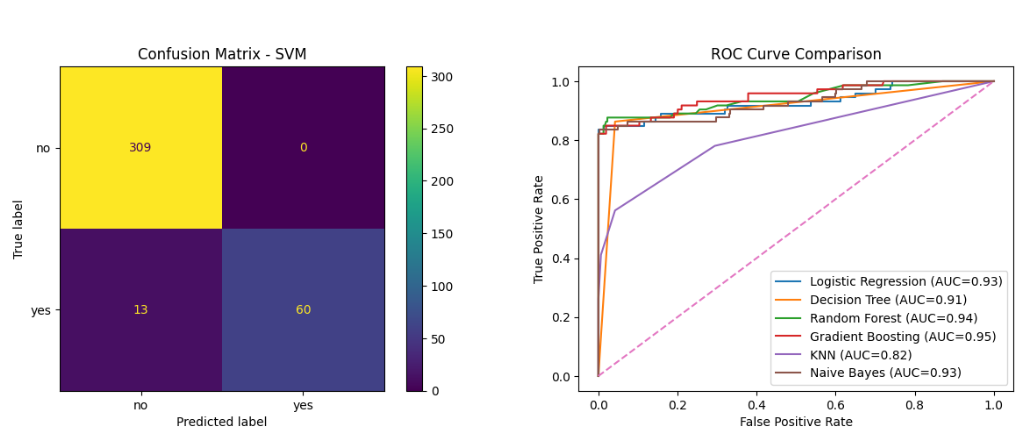
Scabies, a contagious skin disease caused by the Sarcoptes scabiei mite, remains a significant public health concern globally, and accounts for a large proportion of skin disease in many low- and middle-income countries, particularly in tropical regions in Asia, South America, and Oceania. It's essential to keep away from complications through early diagnosis and detection.Secondary bacterial infections are common and can cause severe health complications, including sepsis or necrotizing soft-tissue infection, renal damage and rheumatic heart disease. In this study ,we applied multiple Machine Learning algorithms for the prediction of scabies using a clinical data set.By training and evaluation of seven models including logistic regression, decision tree, random forest, gradient boost, support vector machine, k-nearest neighbor and naive Bayes , model performance was assessed using accuracy, precision, recall, F1 score, and ROC-AUC metrics. For identification of most prestigious features contributed for predictions , we have applied SHAP explainability. The results indicate that ensemble tree-based models, particularly Random Forest and Gradient Boosting, consistently outperform other methods while maintaining interpretability. These findings suggest that interpretable machine learning can serve as an effective clinical decision support tool for the diagnosis of scabies, potentially improving patient outcomes and optimizing resource allocation in healthcare settings.
Article Details

This work is licensed under a Creative Commons Attribution-NonCommercial-NoDerivatives 4.0 International License.