

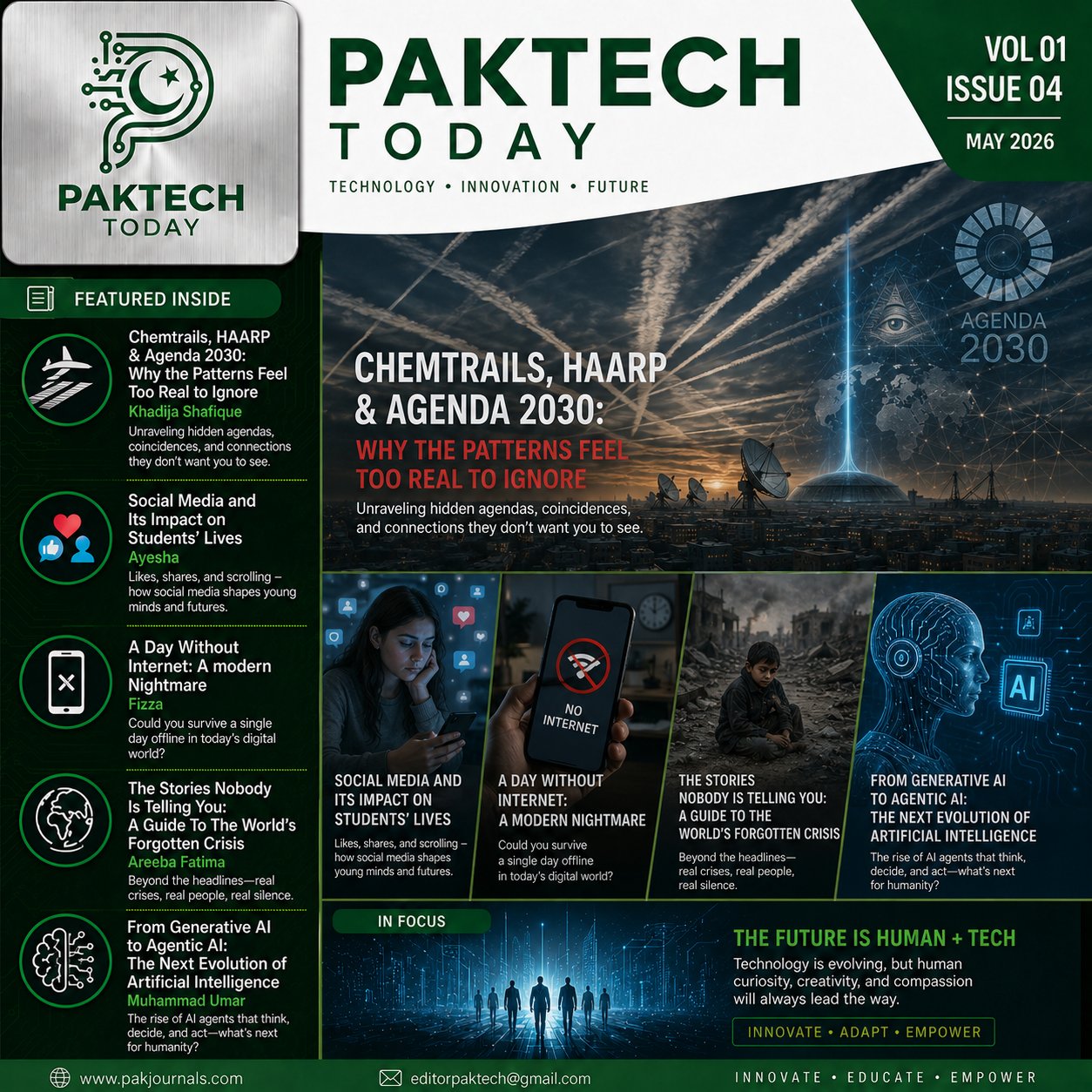
Chemtrails, HAARP & Agenda 2030: Why the Patterns Feel Too Real to Ignore HAARP and agenda-driven theories don't rely on facts alone. They stick because they mirror real-world experiences: quiet moments of unease, patterns one notice without being told.
Article Sidebar
Main Article Content
Abstract
This article examines the enduring appeal of theories surrounding chemtrails, HAARP, and Agenda 2030, focusing not on proving or disproving them, but on understanding why they feel so convincing to many people. It explores how these narratives align with everyday human experiences, such as noticing patterns, feeling a sense of unease, and questioning unseen forces that may influence our lives.
Rather than relying solely on factual claims, these theories gain strength from psychological tendencies like pattern recognition, confirmation bias, and the human need to make sense of uncertainty. The article highlights how moments of observation, subtle coincidences, and gaps in information can create a perception of hidden connections, making these ideas seem more real than they may objectively be.
By analyzing the intersection of perception, emotion, and information, this piece sheds light on how belief systems are formed and sustained in the digital age. It ultimately encourages readers to reflect on the difference between what feels true and what can be verified, emphasizing the powerful role of the human mind in shaping reality.
Downloads
Article Details

This work is licensed under a Creative Commons Attribution-NonCommercial-NoDerivatives 4.0 International License.