

The Human Firewall: The Analysis of Social Engineering Weaknesses in Contemporary Business Society How AI-Augmented Attacks Exploit Human Psychology and What Organizations Must Do to Defend
Article Sidebar
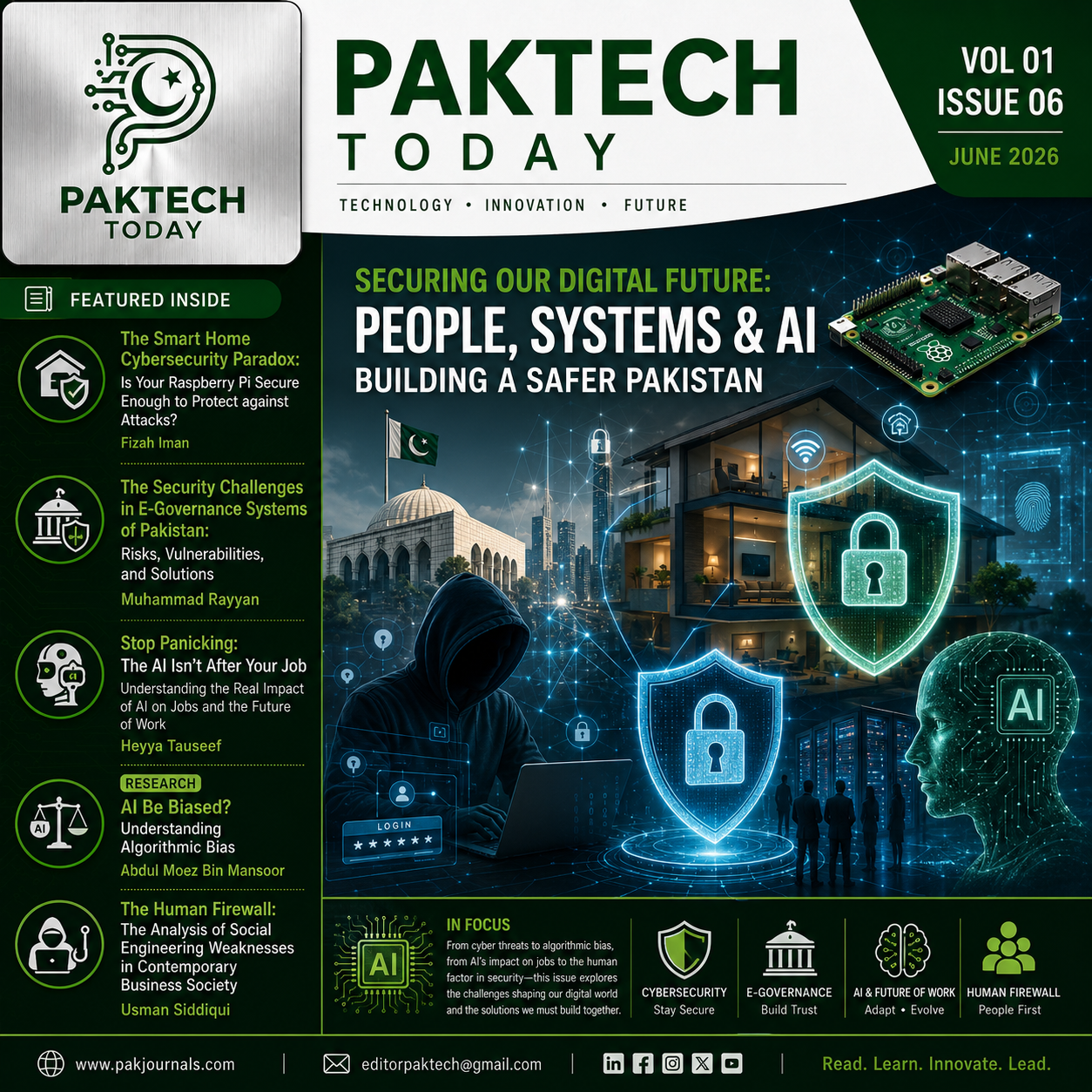
Main Article Content
Abstract
This article examines the critical role of the human element in modern cybersecurity, arguing that despite significant investments in technical defenses such as zero-trust architectures and advanced threat detection systems, human vulnerability remains the most exploitable weakness in organizational security. Social engineering attacks, which manipulate human psychology rather than technical systems, have evolved dramatically in scale, precision, and effectiveness—particularly with the integration of artificial intelligence technologies.
The paper begins by contextualizing social engineering as an adversarial attack on human cognitive systems, where attackers exploit psychological heuristics such as trust, authority, urgency, and social proof. It outlines the major categories of social engineering attacks, including phishing (and its variants such as spear phishing, vishing, and smishing), business email compromise (BEC), pretexting, baiting, quid pro quo attacks, and physical intrusion techniques like tailgating. Each method leverages predictable patterns in human decision-making, making even well-trained employees susceptible under the right conditions.
A central focus of the article is the transformative impact of AI on social engineering. Large language models now enable attackers to generate highly convincing, context-aware phishing messages with near-perfect linguistic quality. Voice cloning and deepfake technologies further erode traditional trust signals, allowing attackers to convincingly impersonate executives in real-time communications. The emergence of agentic AI systems signals a future where social engineering campaigns can be automated, adaptive, and executed at scale with minimal human intervention.
The article also analyzes organizational vulnerability landscapes, identifying high-risk departments such as finance, HR, and IT, as well as vulnerable groups like new employees and senior executives. It highlights how remote and hybrid work environments have expanded the attack surface by reducing informal verification mechanisms.
In response, the paper proposes a comprehensive framework for building an effective “human firewall.” This includes continuous, behaviorally informed security training rather than compliance-based approaches; psychological inoculation strategies that teach employees to recognize manipulation techniques; fostering a culture that encourages verification without fear of penalty; and implementing technical safeguards such as multi-factor authentication, zero-trust architectures, and email authentication protocols.
Additionally, the role of AI in defense is emphasized, including machine learning–based detection systems, behavioral analytics, and emerging deepfake detection tools. The importance of measuring human vulnerability through realistic red teaming exercises is also discussed, shifting focus from theoretical awareness to real-world performance.
The article concludes by emphasizing the urgency for organizations—particularly in Pakistan’s rapidly digitizing economy—to invest in advanced, multidisciplinary cybersecurity strategies. It argues that the future of cybersecurity lies not only in stronger systems, but in smarter, better-trained, and more resilient people.
Downloads
Article Details

This work is licensed under a Creative Commons Attribution-NonCommercial-NoDerivatives 4.0 International License.