

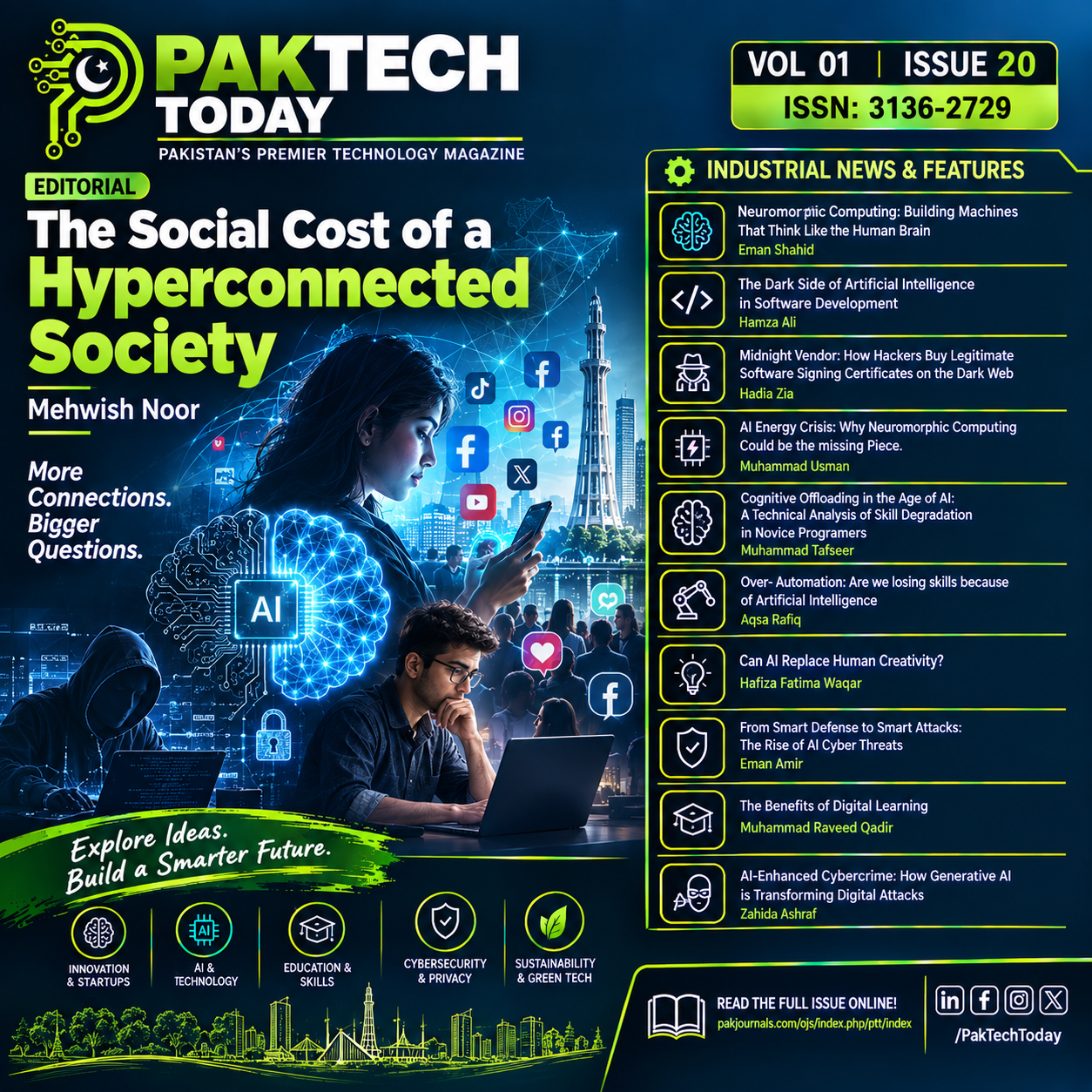
AI-Enhanced Cybercrime: How Generative AI is Transforming Digital Attacks From deepfake scams to automated phishing, generative AI is reshaping the landscape of cyber threats
Article Sidebar
Main Article Content
Abstract
Artificial Intelligence is quickly changing the way industries in the world operate, yet it is also presenting new challenges to the field of cybersecurity. Specifically, generative AI is facilitating cybercriminals to automatize and optimize online attacks, making them more fast, scalable, and harder to detect. This paper will discuss the misuse of AI-powered tools to develop advanced phishing campaigns, deepfakes scams, and malware. In contrast to traditional types of cyberattacks, which require technical skills and time, generative AI enables attackers to create highly convincing text, audio, and video content with little effort. It has been reported that messages generated by AI as phishing emails receive much higher engagement rates than messages written by humans, making cyberattacks more successful. Moreover, the emergence of deepfake technology has provided criminals with the opportunity to impersonate individuals and organizations, resulting in significant financial losses and security breaches. The risks of online AI-driven cybercrime are especially high in the emerging digital economies like Pakistan, where online banking, freelancing, and online services are rapidly growing. These high-tech threats have become more susceptible to businesses, startups, and government institutions. The article highlights the importance of developing a more robust cybersecurity system, such as threat detection systems based on AI, multi-factor authentication, and better user awareness. In the future, to counter AI-enhanced cybercrime, a proactive strategy will be required to integrate technological innovation with the formulation of policies, and the provision of education. By investing in the latest security protocols and changing depending on the emerging threats, the company will be in a better position to protect its digital assets in the future.
Downloads
Article Details

This work is licensed under a Creative Commons Attribution-NonCommercial-NoDerivatives 4.0 International License.